





“Nez very sweet and very greedy candied fruit, nougat, exotic fruits; creamy on the palate, made very sweet by a rather low acidity; Smooth, fat, medium-potency. A delicacy.” La Feuille de Vigne n°65 ,H.Lorin
The 2000 vintage as seen by Mireille Daret:
The 2000 harvest took place from 26 September to 2 November, in four successive sorts, following the “waves” of Botrytisation: 26 and 27 September, 9 and 10 October, 25 to 28 October, and 30 October to 2 November. For each sorting, we picked, grain by grain, the botrytised grapes to the optimum, on the whole of the 5 hectares of the Cru Barréjats. We must discard the grapes damaged by the rains, take only those that are sufficiently concentrated by the Botrytis, to remain in natural sugars and not chaptalize our wines, and leave those that we can pick later, if the weather permits.
In 2000, we sacrificed a third of our grapes that were not sufficiently Botrytized by November 2nd and which were spoiled by the rains… A total yield of 9 hl/ha (25 hl/ha allowed). The pure expression of Botrytis is demanding! The exotic aromas are superb on our musts, and when the winemaker harvests such beautiful fruit, the vinification must have only one goal: to preserve this aromatic expression to bottle only fruit…
The hydraulic vertical pressing allows us to extract without crushing, in three very slow presses until noon the next day, all the sugars and aromas trapped in these candied Botrytis grapes. From then on, everything is decided: the quality of the wines in Barréjats, an expression of the terroir, the fruit and the Botrytis, can be tasted in the musts that flow from the press!
The Cru Barréjats is a selection of our best juices, from our old vines and aged in new barrels (Mercier, Seguin Moreau, Vicard, Saury). Built for guarding. The end of fermentation is followed by a passage to the cold, which reduces the addition of sulphur, and we trace the barrels in the cellar in order to preserve their identity for as long as possible during the ageing process, which will last 12 months.
CRU BARREJATS 2000
| Région | Bordeaux |
|---|---|
| Designation | Sauternes |
| Color | sweet |
| Vintage | 2000 |
| Label | AUCUN |
| Capacity | 75cl |


CRU BARREJATS
"Nez very sweet and very greedy candied fruit, nougat, exotic fruits; creamy on the palate, made very sweet by a rather low acidity; Smooth, fat, medium-potency. A delicacy." La Feuille de Vigne n°65 ,H.Lorin
The 2000 vintage as seen by Mireille Daret:
The 2000 harvest took place from 26 September to 2 November, in four successive sorts, following the "waves" of Botrytisation: 26 and 27 September, 9 and 10 October, 25 to 28 October, and 30 October to 2 November. For each sorting, we picked, grain by grain, the botrytised grapes to the optimum, on the whole of the 5 hectares of the Cru Barréjats. We must discard the grapes damaged by the rains, take only those that are sufficiently concentrated by the Botrytis, to remain in natural sugars and not chaptalize our wines, and leave those that we can pick later, if the weather permits.
In 2000, we sacrificed a third of our grapes that were not sufficiently Botrytized by November 2nd and which were spoiled by the rains... A total yield of 9 hl/ha (25 hl/ha allowed). The pure expression of Botrytis is demanding! The exotic aromas are superb on our musts, and when the winemaker harvests such beautiful fruit, the vinification must have only one goal: to preserve this aromatic expression to bottle only fruit...
The hydraulic vertical pressing allows us to extract without crushing, in three very slow presses until noon the next day, all the sugars and aromas trapped in these candied Botrytis grapes. From then on, everything is decided: the quality of the wines in Barréjats, an expression of the terroir, the fruit and the Botrytis, can be tasted in the musts that flow from the press!
The Cru Barréjats is a selection of our best juices, from our old vines and aged in new barrels (Mercier, Seguin Moreau, Vicard, Saury). Built for guarding. The end of fermentation is followed by a passage to the cold, which reduces the addition of sulphur, and we trace the barrels in the cellar in order to preserve their identity for as long as possible during the ageing process, which will last 12 months.
Learn more >
The 2000 vintage as seen by Mireille Daret:
The 2000 harvest took place from 26 September to 2 November, in four successive sorts, following the "waves" of Botrytisation: 26 and 27 September, 9 and 10 October, 25 to 28 October, and 30 October to 2 November. For each sorting, we picked, grain by grain, the botrytised grapes to the optimum, on the whole of the 5 hectares of the Cru Barréjats. We must discard the grapes damaged by the rains, take only those that are sufficiently concentrated by the Botrytis, to remain in natural sugars and not chaptalize our wines, and leave those that we can pick later, if the weather permits.
In 2000, we sacrificed a third of our grapes that were not sufficiently Botrytized by November 2nd and which were spoiled by the rains... A total yield of 9 hl/ha (25 hl/ha allowed). The pure expression of Botrytis is demanding! The exotic aromas are superb on our musts, and when the winemaker harvests such beautiful fruit, the vinification must have only one goal: to preserve this aromatic expression to bottle only fruit...
The hydraulic vertical pressing allows us to extract without crushing, in three very slow presses until noon the next day, all the sugars and aromas trapped in these candied Botrytis grapes. From then on, everything is decided: the quality of the wines in Barréjats, an expression of the terroir, the fruit and the Botrytis, can be tasted in the musts that flow from the press!
The Cru Barréjats is a selection of our best juices, from our old vines and aged in new barrels (Mercier, Seguin Moreau, Vicard, Saury). Built for guarding. The end of fermentation is followed by a passage to the cold, which reduces the addition of sulphur, and we trace the barrels in the cellar in order to preserve their identity for as long as possible during the ageing process, which will last 12 months.
Other products in the domain CRU BARREJATS
-
More
info
CRU BARREJATS-DARET 2011 75cl
CRU BARREJATSSauternes45,00 € + -
More
info
CRU BARREJATS-DARET 2010 75cl
CRU BARREJATSSauternes45,00 € + -
More
info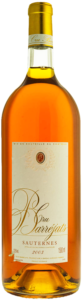
CRU BARREJATS EN MAGNUM 2003 150cl
CRU BARREJATSSauternes120,00 € + -
More
info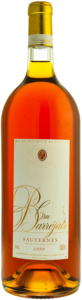
CRU BARREJATS EN MAGNUM 1999 150cl
CRU BARREJATSSauternes105,00 € + -
More
info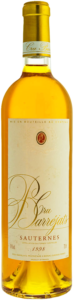
CRU BARREJATS 1998 75cl
CRU BARREJATSSauternes50,00 € + -
More
info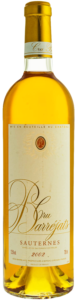
CRU BARREJATS 2002 75cl
CRU BARREJATSSauternes50,00 € +